Before we start, a note on the name. If you've been out of the market for a few years, you'll notice "Pioneer DJ" has been joined by "AlphaTheta" on a lot of boxes. Pioneer DJ's parent company became AlphaTheta Corporation, and since 2024 new products have been launching under the AlphaTheta brand while the Pioneer DJ name lives on across the existing club range. Same company, same engineers, same rekordbox. Just two badges on the shelf. Don't let it confuse you.
And a note on how DJing has changed. When we first wrote this guide, the assumption was that a serious DJ carried a laptop. That's no longer a given. Standalone gear has matured to the point where most of our working DJs now turn up with a USB-C stick (or nothing but a phone and a Wi-Fi connection) and play a full night without a computer in the booth. We've restructured this guide to reflect that.
Sections are split into controllers (laptop required), standalone systems (no laptop needed), and analogue / vinyl. Each has high-end, mid-range and budget picks.
If you are going the laptop route, we still recommend an Apple Silicon MacBook Pro or Air for stability and portability. The M-series chips run rekordbox and Serato with the fans off, which matters more than you'd think in a hot booth.
1. The Best Controllers for rekordbox / Serato
High End: AlphaTheta DDJ-FLX10
The DDJ-FLX10 has taken over from the old DDJ-1000 as the flagship club-style controller, and it's a serious step up. Four channels, full-size jog wheels with on-jog displays, deep effects, and the headline feature: real-time track separation, letting you pull vocals, drums and melody apart mid-mix and rebuild them across decks. It works with both rekordbox and Serato DJ Pro out of the box, so there's no more choosing between a DDJ-1000 and a DDJ-1000SRT.
It's a beast, and it wins the award for size, sexiness and functions. It would be right at home in a top-end DJ booth, assuming every guest DJ brings their own laptop. One thing to check before you buy: track separation is computationally demanding, so make sure your laptop is up to it.
Mid-Range: AlphaTheta DDJ-GRV6
This is the one we'd point most working DJs at, and it's arguably the smartest pick in the entire AlphaTheta controller range. It replaced the underwhelming DDJ-FLX6 and fixed the thing that mattered most: the layout. The eight performance pads sit above the jog wheels exactly as they do on a CDJ-3000, and the Beat FX section is modelled on the DJM-A9 club mixer.
That means if you practise at home on a GRV6, walking into a club booth with CDJs and a DJM feels like sitting down at your own kit. Several reviewers have pointed out it's a closer stepping stone to club gear than the pricier FLX10. It's four-channel, ships with both rekordbox and Serato DJ Pro, and adds the "Groove Circuit" live-remix tools for pulling drum parts apart on the fly.
The catches: no external inputs beyond the mic channel, so no turntables or hardware, and the pitch faders are short next to those full-size jogs.
Budget: AlphaTheta DDJ-FLX4
The DDJ-SX3 that used to sit here is long gone. The FLX4 is now the near-universal recommendation for a first controller, and deservedly so: club-standard mixer layout, smooth silent jogs, and licences for both rekordbox and Serato DJ Lite, so you can try both ecosystems before committing. It also runs off a phone or tablet, which is genuinely useful for practice.
If you want to spend even less, the DDJ-FLX2 sits below it as the cheapest way into the AlphaTheta ecosystem. For maximum jog-wheel feel on a tight budget, the Numark Mixtrack Platinum FX is the outlier worth a look. It's the only controller near that price with displays built into the platters.
For Scratch DJs: AlphaTheta DDJ-REV7 or DDJ-REV5
The REV7 is the top of the battle-controller tree: motorised platters, a mixer section modelled on the legendary DJM-S9, 22 onboard FX and a full Serato DJ Pro licence. Worth knowing in 2026: retail stock has thinned considerably and new units increasingly surface through marketplaces rather than the big retailers, so if you find one at a fair price, don't sit on it.
The REV5 carries the same battle layout at mid-range money, is far easier to find, and adds Stems isolation plus full-size adjustable mechanical jog wheels. For open-format and mobile work, it's the more sensible buy.
2. The Best Standalone Systems (No Laptop Needed)
High End: 2 × AlphaTheta CDJ-3000X & 1 × Pioneer DJ DJM-A9
This is the new club standard, and both halves of the pairing have changed since our last update.
The CDJ-3000X is the successor to the CDJ-3000. It keeps the 10.1-inch touchscreen but adds a USB-C port for drives and computers, Wi-Fi for cloud libraries and streaming (Beatport Streaming and TIDAL among them), a new DAC and redeveloped power supply, and a reinforced button assembly and aluminium top panel for booth abuse. Tracks are fully cached to memory, so playback continues uninterrupted even if a drive is pulled or the connection drops mid-set. It's a small detail that has saved a lot of nights.
The DJM-A9 has replaced the DJM-900NXS2, which is now discontinued. It brings ESS 32-bit A/D and D/A conversion on the inputs and the master and booth outputs, upgraded channel EQs, next-generation Beat FX, dual built-in soundcards, and a phantom-powered mic input. That last one is a first on a DJ mixer, and a genuinely useful one for mobile and event work where you're handed a decent condenser mic. It also has Wi-Fi for AlphaTheta's Stagehand app, letting a front-of-house engineer monitor levels from an iPad without climbing into the booth (note: this needs a separate LAN router you supply).
This is the same pairing you'll find in the booth at top festivals and clubs worldwide, and it doesn't come cheap. Click through for current pricing.
A new middle option: AlphaTheta launched the CDJ-1500X in 2026, sitting between the entry players and the 3000X. It brings a lot of club-player habits down into a setup meant for tighter booths, so it's worth a look if a pair of 3000Xs is out of reach but you want separates rather than an all-in-one.
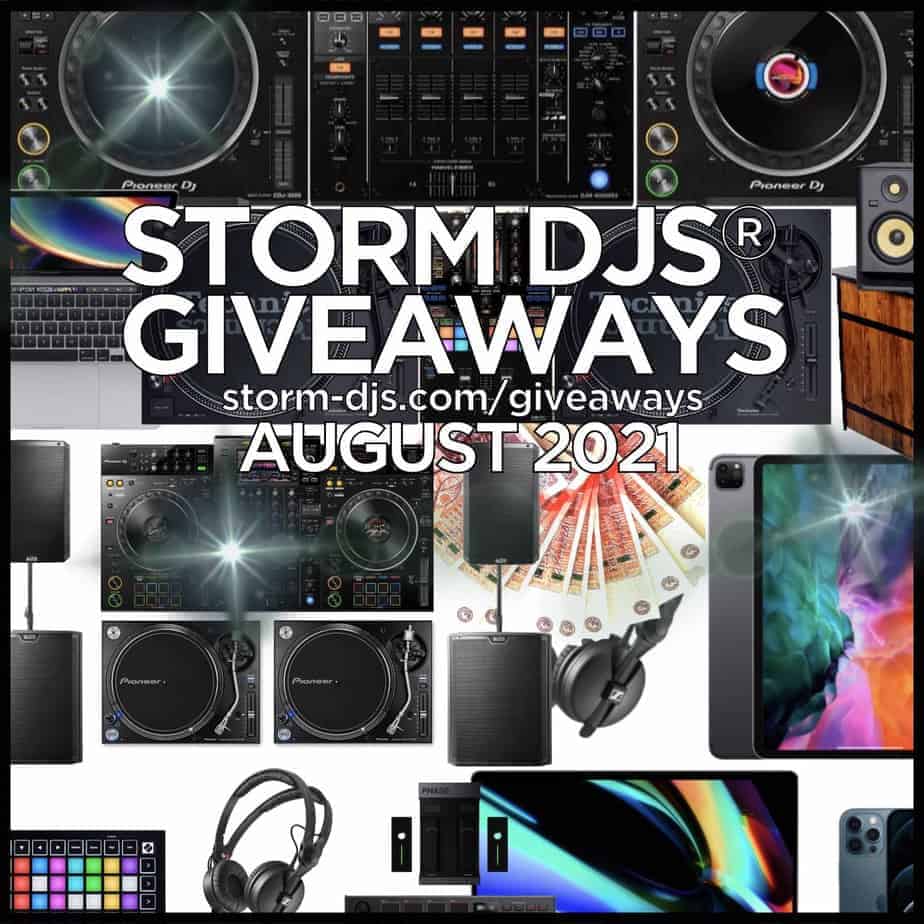
Look out for our monthly giveaway, where we give setups like this away.
Flagship All-In-One: AlphaTheta XDJ-AZ
The XDJ-XZ has been replaced, and the XDJ-AZ is a proper upgrade rather than a refresh. The headline change: it's a true four-channel standalone. The XZ only managed two in standalone mode, which was its most-complained-about limitation.
It borrows heavily from the CDJ-3000 and DJM-A9, so the jog wheel feel and layout translate straight to a club booth. You get a 10.1-inch capacitive touchscreen, built-in Wi-Fi with StreamingDirectPlay for Apple Music, Beatport Streaming and TIDAL, rekordbox cloud library sync, and it doubles as a controller for rekordbox and Serato DJ Pro. There's also a built-in SonicLink transmitter for AlphaTheta's HDJ-F10 wireless headphones, meaning no cable between you and the mixer. For anyone who's ever ripped a headphone lead out mid-mix, that's worth the price of admission on its own.
RRP is around £2,799 including VAT, though street pricing has settled a bit below that. It's genuinely cheaper than buying the separates it emulates.
Also consider: the OPUS-QUAD remains in the range as the more design-led four-channel all-in-one, with a distinctive angled form factor and the same streaming integrations.
Best for Mobile & Outdoor Work: AlphaTheta OMNIS-DUO
This one didn't exist when we last wrote this guide, and for a mobile DJ business it's been a quiet revelation. Think of it as a shrunken OPUS-QUAD with a battery: two decks plus mixer, a flat touchscreen with light and dark modes for outdoor visibility, around five hours of battery life, and, in a standalone first, Bluetooth in and out.
At around 10lb it genuinely goes in a backpack. Rooftops, beaches, drinks receptions in a marquee with no power run yet, the cocktail hour before the main room opens. This is the unit for the awkward segments of complex bookings. Around £1,369.
Its Denon equivalent is the PRIME GO+, and Numark's Mixstream Pro Go is the budget option in the same category.
Budget Standalone: AlphaTheta XDJ-AN
The XDJ-RX2 we recommended last time is long discontinued, and so is the XDJ-RR that followed it. The XDJ-AN, launched in 2026 at £999, is now the cheapest way into the AlphaTheta all-in-one range, and it drops the barrier to standalone DJing substantially.
Think of it as a standalone DDJ-FLX4: similar build, similar jog wheels, similar mixer layout, with a screen in the middle. It leans hard into streaming and cloud, covering Apple Music, Beatport Streaming and TIDAL, plus rekordbox cloud sync, and it runs the rekordbox and djay mobile apps over USB-C so you can genuinely perform from a phone. It also supports the DJM-REC app for recording and streaming, a first for an all-in-one at this level.
Two things to know before you buy. The jog wheels are noticeably smaller than full-size club platters with no on-jog displays, and there's only one USB-C port for drives, so if you're bringing your own music you need USB-C sticks. Budget for a couple of good ones.
Still in the range: the XDJ-RX3 sits between the AN and the AZ as the two-channel all-in-one with a proper 10.1-inch screen. If you want the bigger screen and club-style build but don't need four channels, it's still a strong buy.
The Denon Alternative: Denon DJ PRIME 4+
Worth knowing about if you're not wedded to rekordbox. The PRIME 4+ is arguably the most connected single box you can buy: four USB inputs, an SD card slot, a 2.5" SATA drive bay so you can install an internal drive, four switchable phono/line RCA inputs for external players or turntables, plus Wi-Fi or Ethernet streaming from Apple Music, Amazon Music, Beatport, SoundCloud and TIDAL. The 10.1-inch screen tilts, which no AlphaTheta unit does.
The trade-off is ecosystem. It runs Engine DJ rather than rekordbox. Engine DJ does import rekordbox libraries, but if you regularly play clubs with CDJs, keeping your library native in rekordbox makes life simpler. Denon's SC LIVE 4 sits below it with built-in speakers and a lighter build for smaller gigs.
3. Analogue / Vinyl: The Traditionalists' Section
High End: 2 × Technics SL-1210MK7 & 1 × Pioneer DJ DJM-S11
Good news: nothing has dethroned the Technics. The SL-1200/1210MK7 remains the definitive DJ turntable and the industry gold standard, whether you're playing actual vinyl or using the platters as jog wheels for a Serato or rekordbox DVS setup. Solid build, quartz-locked pitch, and it lives up to the legacy.
Be aware of what it isn't, though. The tonearm is fundamentally the same design the MK2 carried in 1979, and there is nothing digital on board: no USB out, no DVS hardware, no MIDI. It's a record player, full stop. For some people that's the entire point. For others, it's why the alternatives below exist.
On the mixer side, the DJM-S11 is still the flagship battle mixer: two channels handling four decks, a 4.3-inch customisable touchscreen, 22 Beat FX, the Magvel Fader Pro crossfader, eight pads per channel, and both Serato and rekordbox support. Check stock before ordering, as availability has been patchy for a while now.
Battle Mixer Alternatives
- Pioneer DJ DJM-S7: essentially the S11 without the touchscreen, at a lower price. For a lot of DJs that's a feature, not a compromise.
- Pioneer DJ DJM-S5: the entry point to the scratch range. Magvel Pro fader, Serato included, exceptional value.
- Rane Seventy-Two MKII: the benchmark for serious scratch and battle DJs. Steel construction, three MAG FOUR faders adjustable for tension, reverse, contour and cut-in point, 16 MPC-style pads and a 4.3-inch touchscreen. Serato DJ Pro only, no rekordbox. The Rane Seventy is the same idea without the screen.
Budget & Hybrid Turntables
The Audio-Technica AT-LP120USB we used to recommend has been superseded. Look at the AT-LP140XP or AT-LP1240-USB XP for the current equivalents.
But our honest budget pick now is the Pioneer DJ PLX-1000: higher torque than the MK7, the same road-ready intent, a wider ±50% pitch range, and it costs meaningfully less. It doesn't carry the Technics badge, but it's a club-grade deck. The Reloop RP-7000 MK2 undercuts both while matching the feature list, and is arguably the best-performing deck per pound on the market.
If you want your turntables to do more than spin records:
- Reloop RP-8000 MK2: a genuine hybrid, with performance pads and USB built into the deck itself. Adjustable torque from 2.8 to 4.5 kg/cm, sub-0.2-second startup. Ideal for DVS-heavy Serato workflows.
- Pioneer DJ PLX-CRSS12: offers needle-free digital DVS control for Serato DJ Pro and rekordbox, so you can switch between real vinyl and digital control without swapping records.
- Rane SYSTEM ONE: a new category and worth knowing about. It's the first standalone system with motorised platters and real-time stems processed on the hardware. No laptop, but a turntablist's control surface.
What Else Is Worth Knowing in 2026
A few things that didn't fit neatly into the categories above but that our DJs keep asking about:
- Pioneer DJ DJM-V5: a compact three-channel mixer launched this year that keeps real sound-shaping range in a smaller footprint. Very relevant if you work in tight or imperfect rooms, which as mobile DJs, we mostly do.
- AlphaTheta RMX-IGNITE: the long-awaited successor to the RMX-1000 effector. Digital send and return (analogue still there), Pro DJ Link, an expanded sampler with more pads, overdub and colour effects, plus two separate effects engines for frequency-based trigger and isolate FX.
- AlphaTheta Euphonia: the rotary mixer, if that's your world.
- HDJ-F10 SonicLink headphones: wireless with genuinely low latency, connecting directly to the XDJ-AZ and other compatible units.
Gear That's Now Discontinued
If you're reading an older version of this list, or an older guide elsewhere, these are no longer current and should only be bought used, at used prices:
DDJ-1000 and DDJ-1000SRT, DDJ-SX3, DDJ-FLX6, DJM-900NXS2, XDJ-XZ, XDJ-RX2, XDJ-RR. The DJM-750MK2 is technically still listed but has been starved of stock for years, so the used market is a more realistic route.
None of these are bad. A 900NXS2 in good condition is still a superb mixer and will get you most of the way to an A9 for a fraction of the money. Just don't pay new-gear prices for them.
We hope you found our summary of the best DJ equipment useful. We'll keep it up to date as new and improved models come onto the scene, and given how much has landed in the last eighteen months, that's likely to be sooner rather than later.
Look out for our new DJ equipment giveaway, where we'll be giving away a whole load of recommended bundles!